POSTNORD is a parcel management solution that manages storing, sorting and tracking the movement of parcels from origin to destination. This application solution essentially combines 3 components of their business - Warehouse Management, Transport Management and Delivery Management.
This project was so huge that we delivered it in modules and used Agile Methodology of software development using Jira.

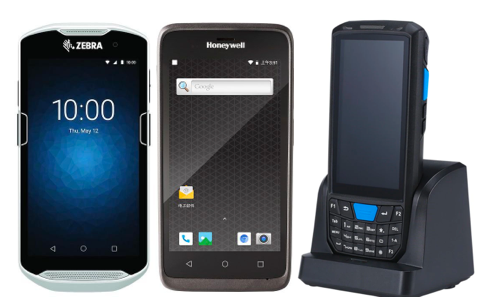
This project involved designing for portable, handheld devices called rugged devices. These come with built-in barcode scanner, long battery life and are pretty much unbreakable. The common devices employees used are Zebra, Honeywell, Newland, HT90, TC25, TC56, EDA51.
I was the sole designer on the project.
- Minimize UI Distractions.
- Ease of use.
- Optimize Button Placement for One-Handed Use.
- Limited and Efficient Processes.
- Multilingual UI
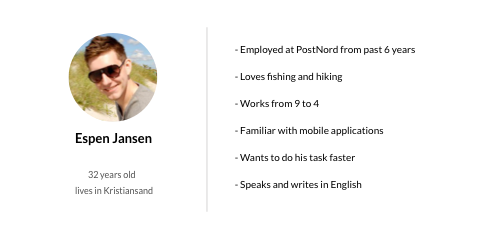
Unfortunately, I didn’t get the opportunity to talk to the real users. But based on the discussion with the client and the second-hand user interviews, I outlined some of the user goals. It was interesting to note that 90% of the employees have retained the same positions since the start of their careers. There were hardly any changes in the workforce and the hierarchical system.
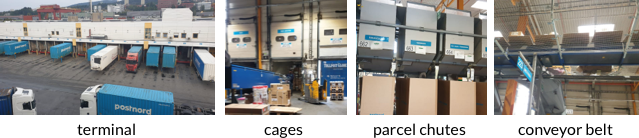
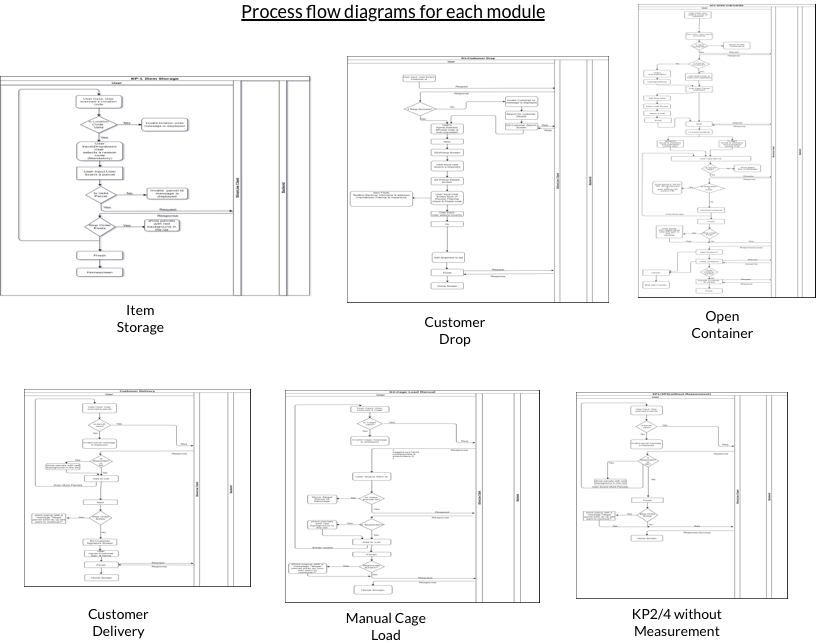
Our team visited the client location and witnessed every step of the logistic process inorder to understand procedures, standards and operations. They also gathered pictures, videos and second-hand interviews from the actual users. From the acquired data, we identified separate activities and categorized them into 6 modules - Item Storage, KP2/4 Without Measurement, Open Container, Manual Cage Load, Customer Drop and Customer Delivery. Consequently, we created flow diagrams for each module.

Through a series of interviews with client, we understood their parcel transport system and categorized them into 6 modules - Item Storage, KP2/4 Without Measurement, Open Container, Manual Cage Load, Customer Drop and Customer Delivery. Consequently, we created flow diagrams for each module.

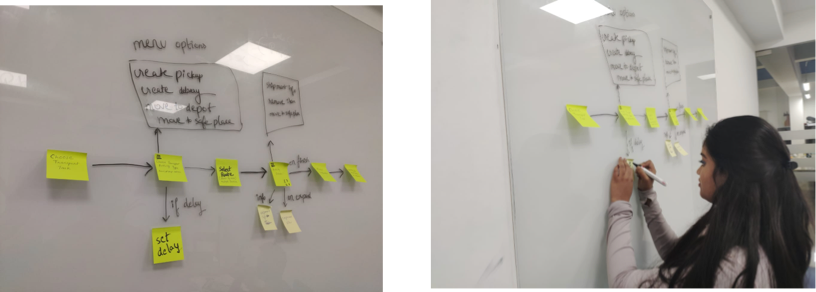
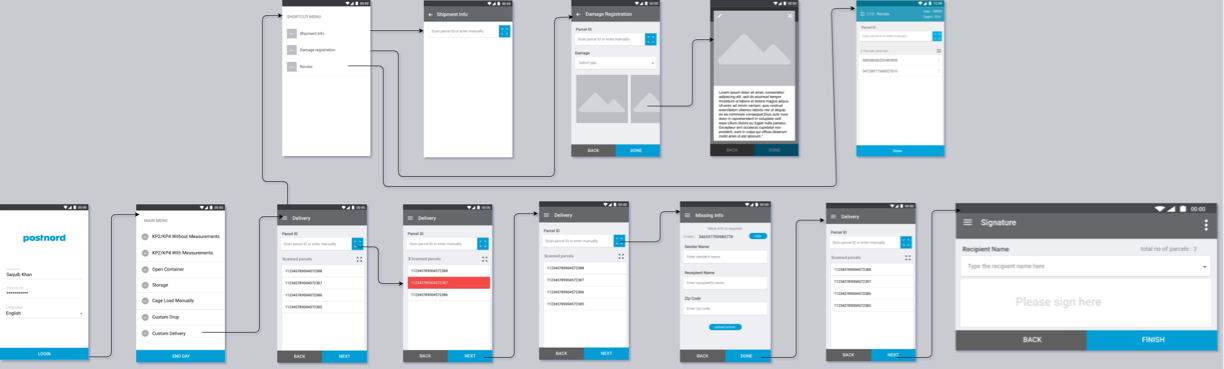
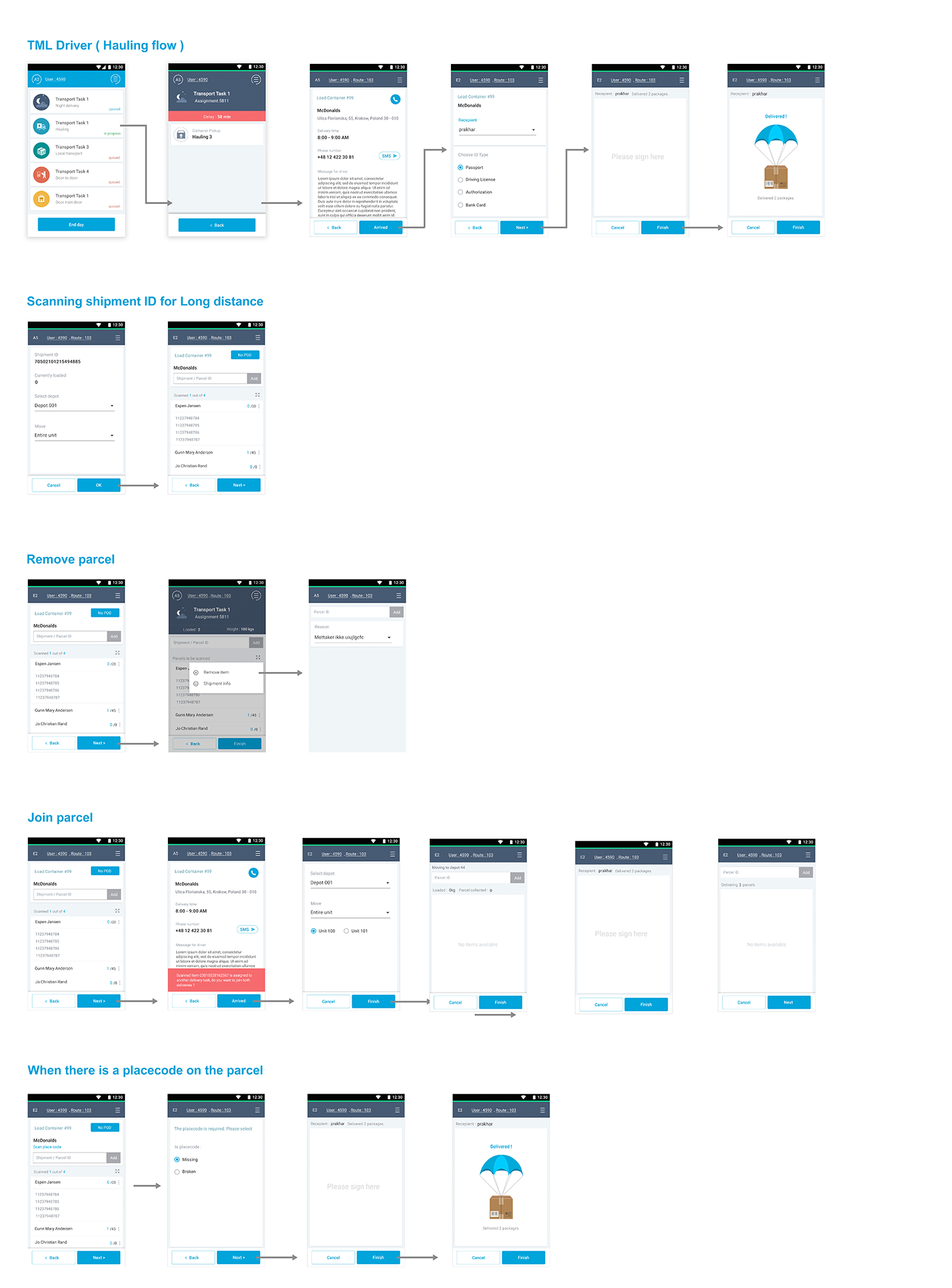
From observing business processes, we identified user and user activities during each module and created user journey maps in an iterative process. This gave us more insight and identified pain points. We identified 6 different user flow modules. From here, we created wireframe flow diagrams.


-Keeping ergonomics in mind, I made sure to design with appropriate sizes for buttons and other tappable areas/elements while considering the orientation and grip of the users.
- The device operates on Google operating system. The version we were implementing it for was 8.0.
- The designs were created for 1280x720 dimensions.
- Workers used mostly thumb , fewer than half hold their phone with one hand.
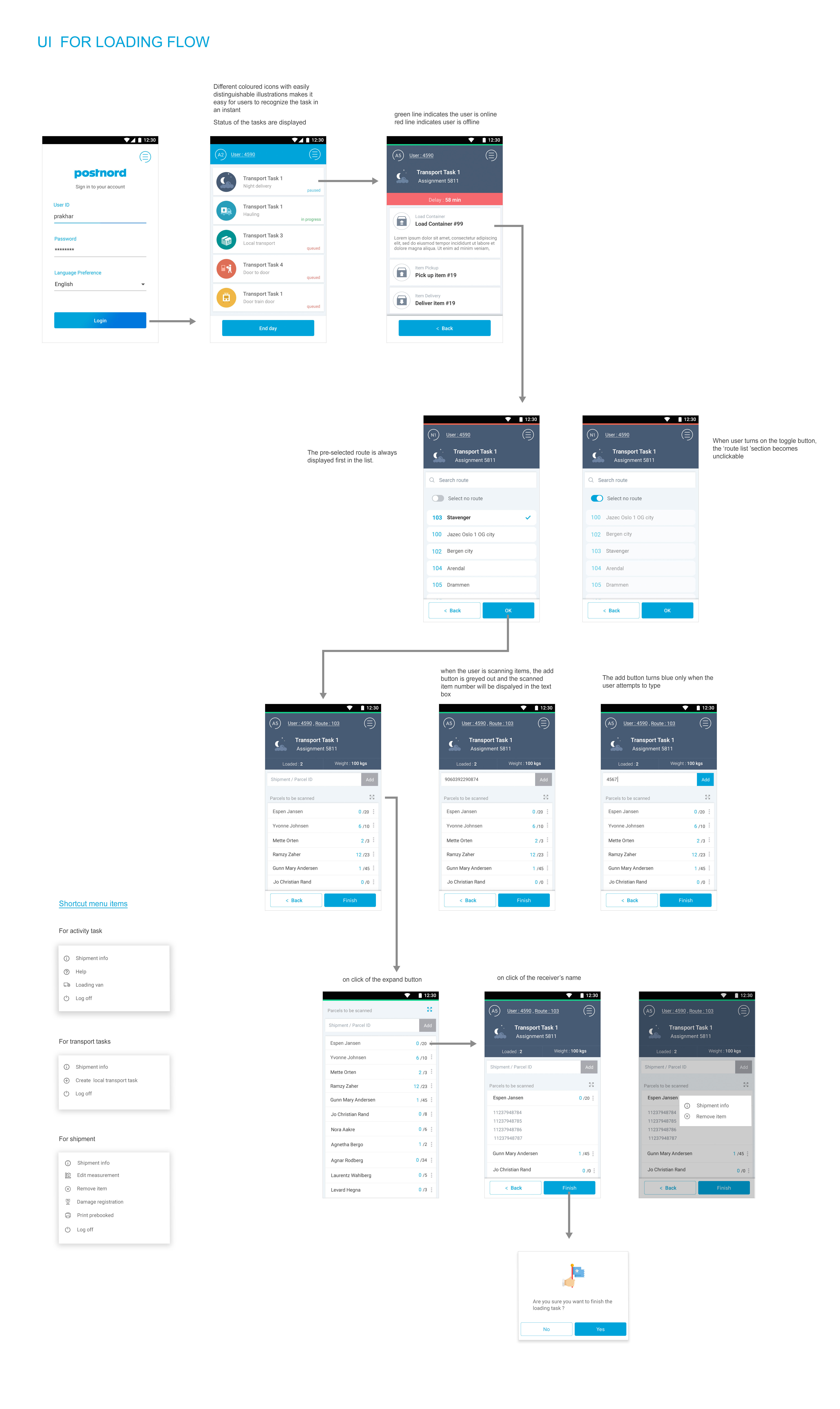
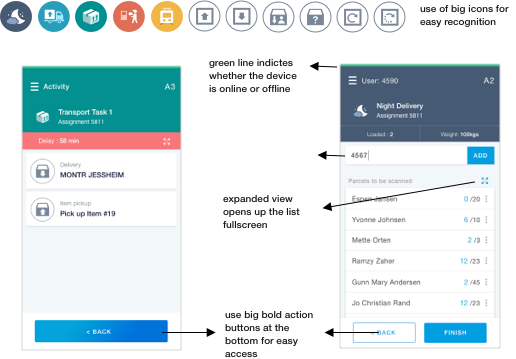
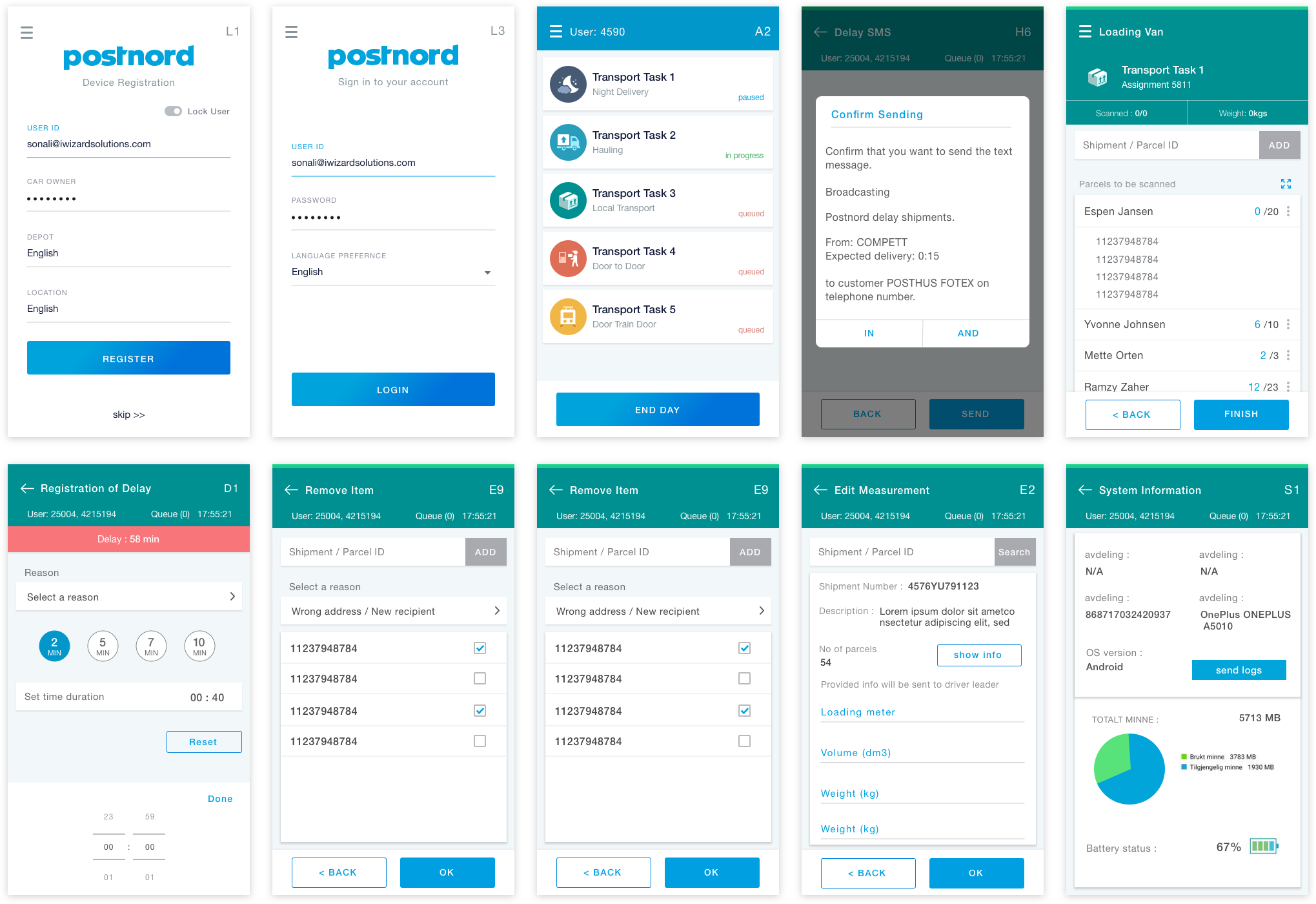
Here are a few of the final designs. I made some specific design decisions to help navigating through the screen much faster and easier on a handheld device.