Krishna Institute of Medical Sciences is a hospital chain across 9 locations.
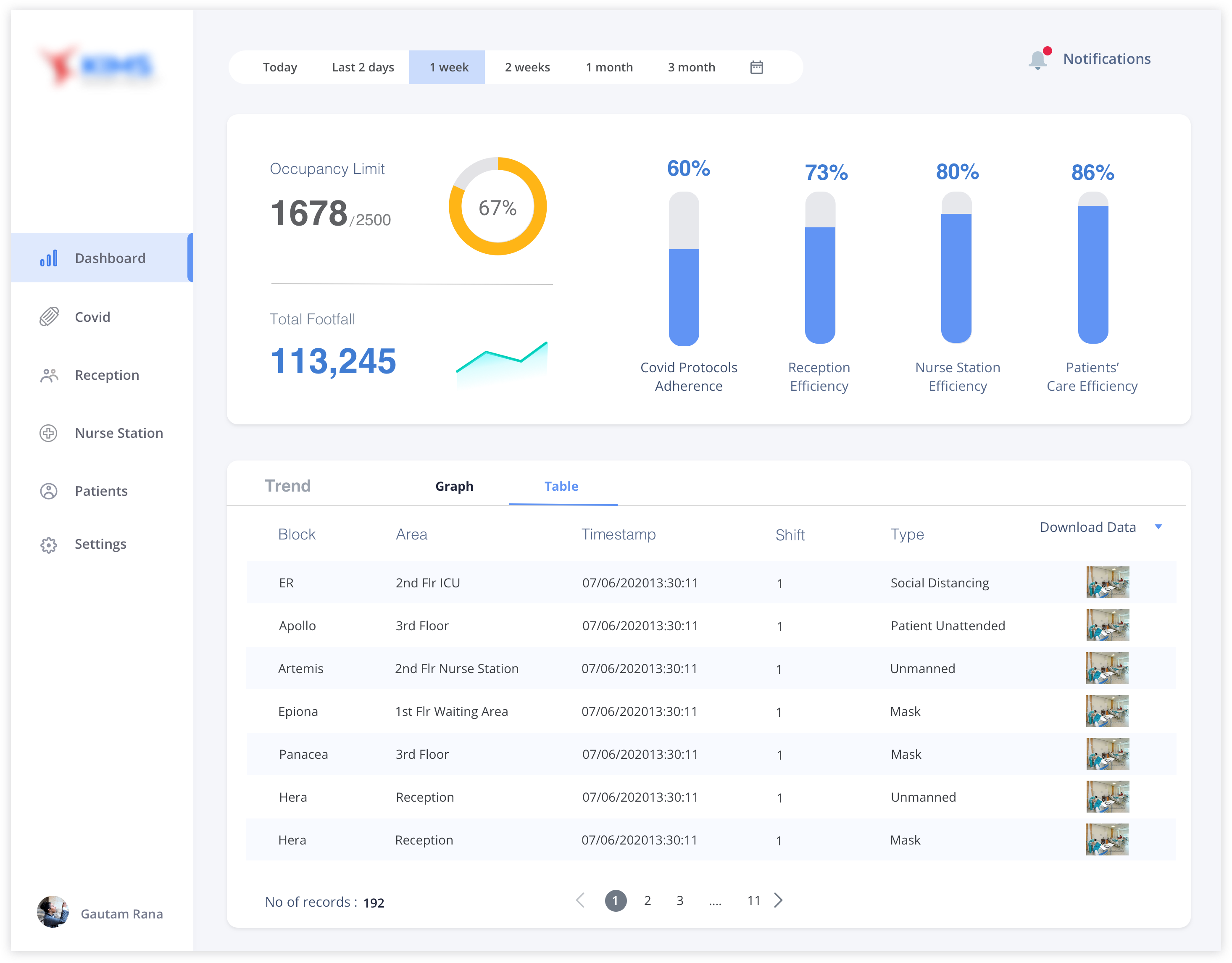
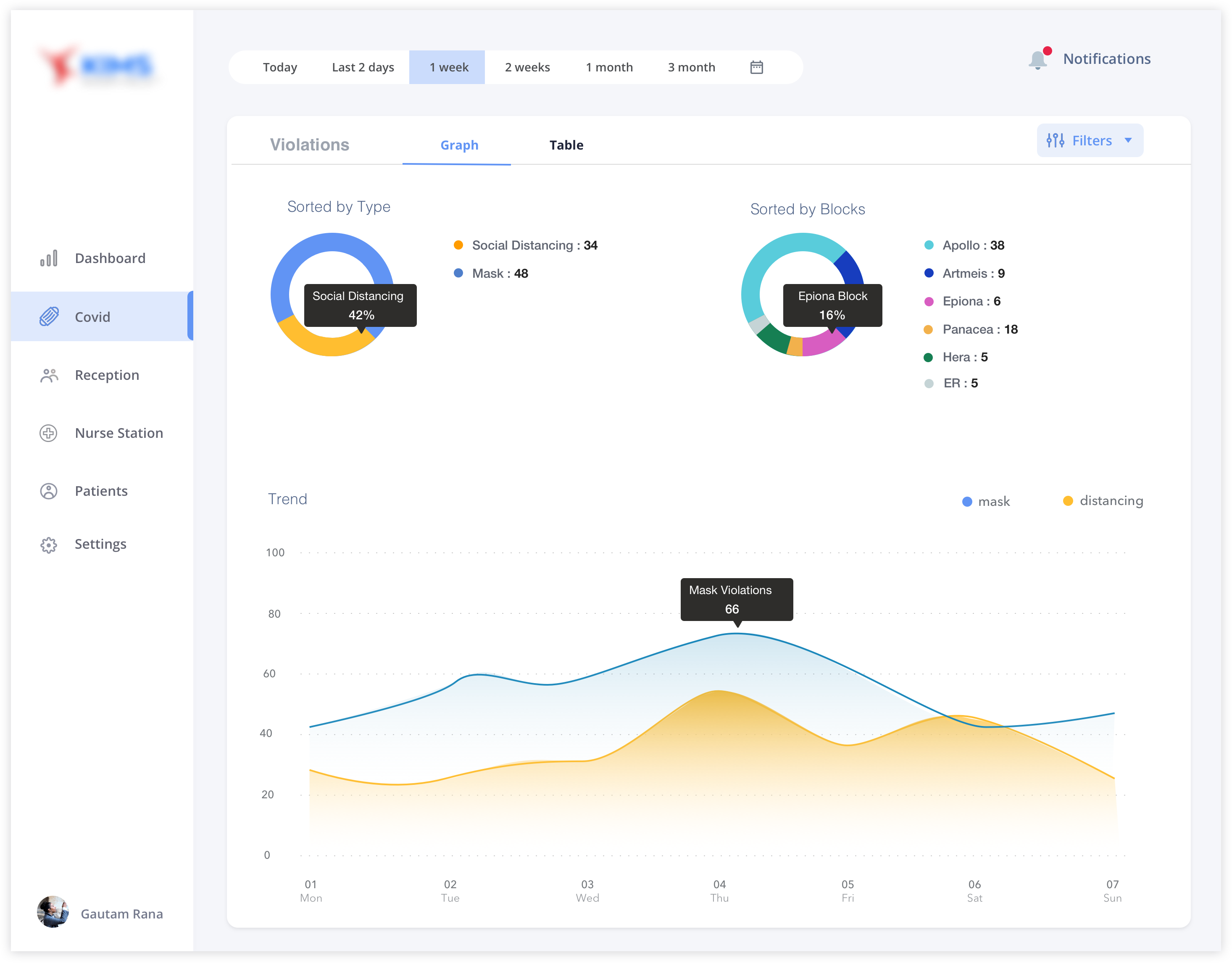
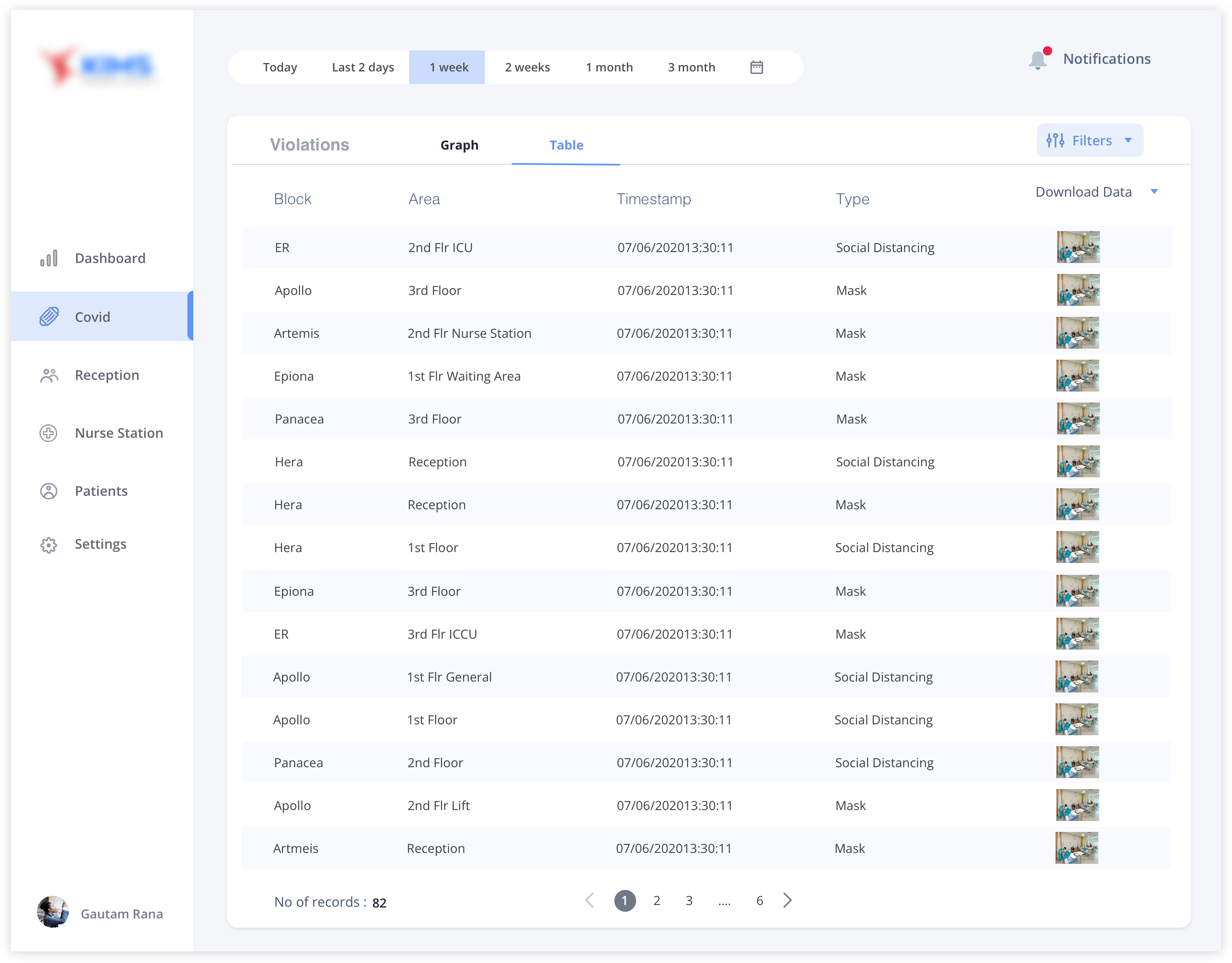
I was tasked to design a hospital monitoring system, which employs an Artifical Intelligence based Machine Learning on the existing CCTV infrastructure in the hospital to track, monitor, record and raise alarms in cases of non-compliance.
Goal
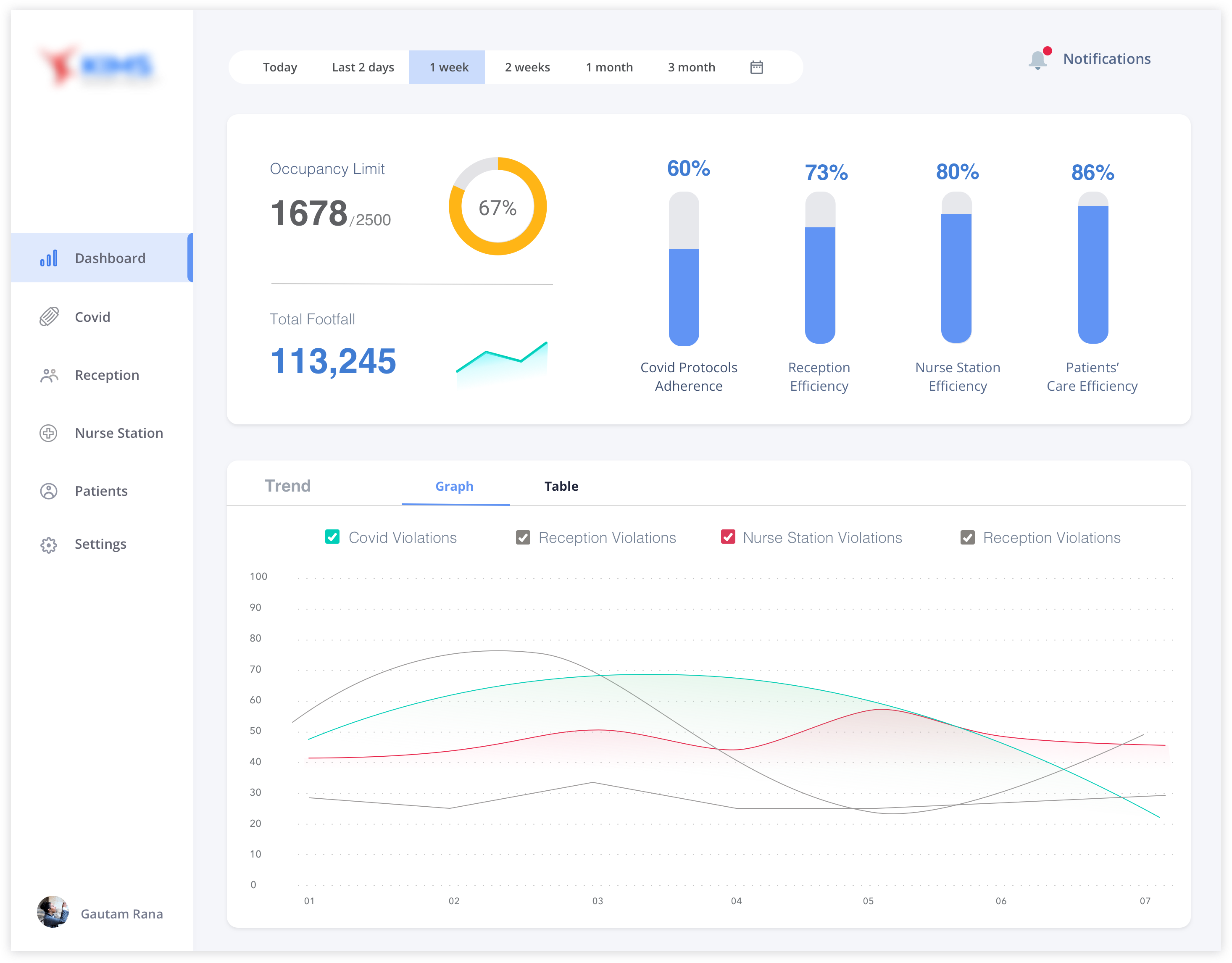
The goal of the project was to improve the efficiency and quality of healthcare; and to maintain safety precautions by adhering to new COVID protocols within the premise of the hospital. Another main goal was to reduce the need for human-monitored CCTV surveillance and uncover trends, raise alarms, and trigger a real-time call to action.
Role and Research
I was the sole designer on the project. But, I worked very closely with Machine Learning engineers to understand the client's use cases and business needs. I also relied heavily on the secondary field studies they had conducted at the hospital premise as well as data obtained from one-to-one client interviews. I also worked with the web development team to understand the implementation constraints and possibilities.
Business needs
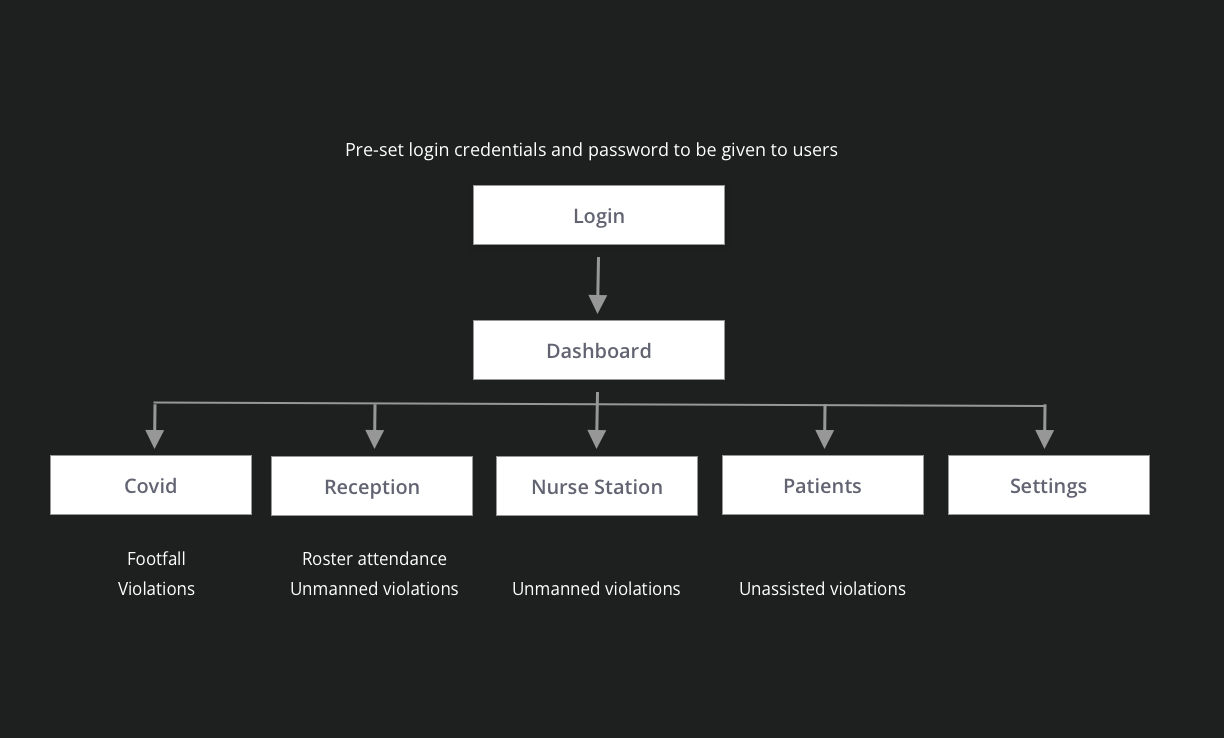
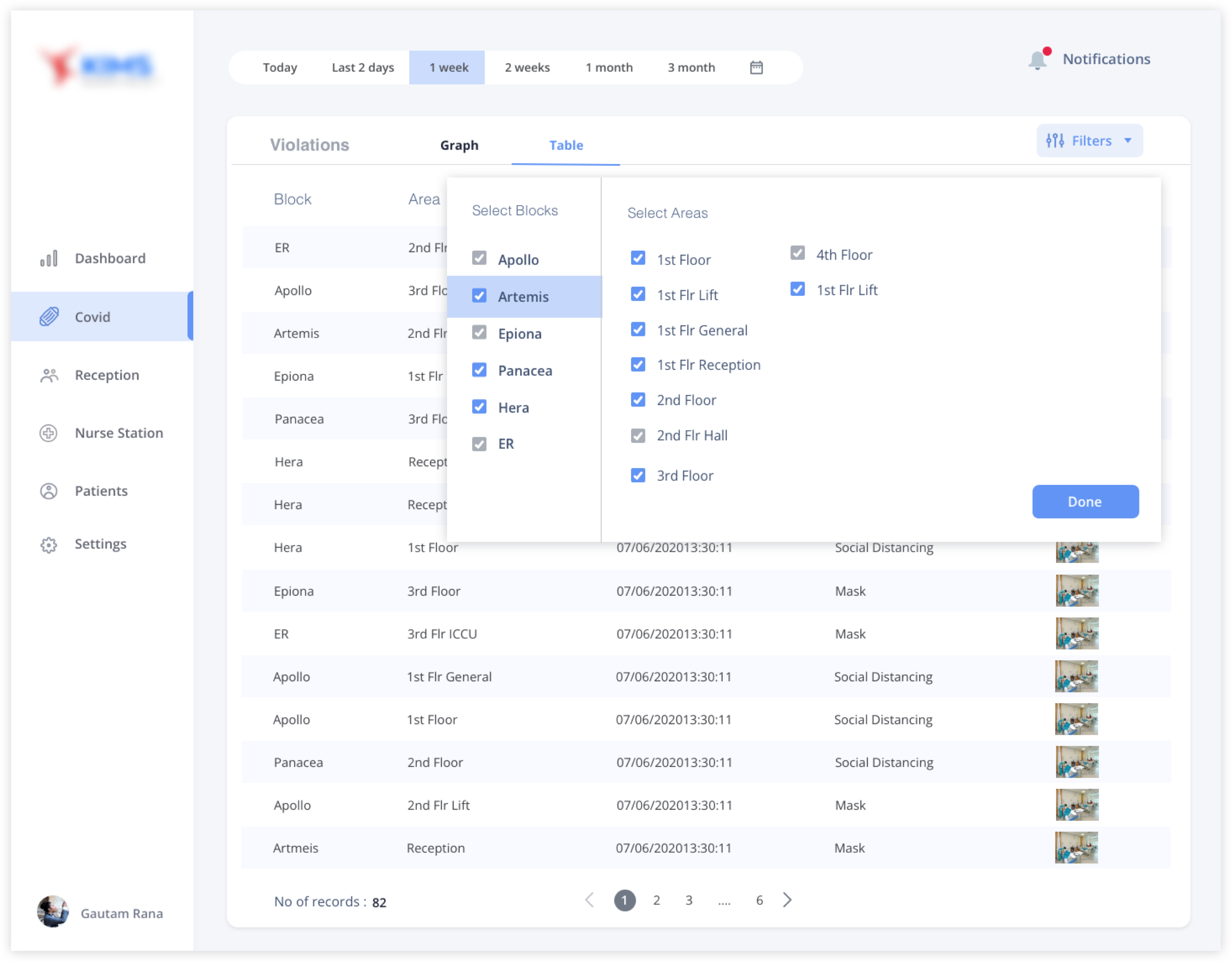
- Monitoring and tracking COVID mask and social distancing breaches.
- Maintaining the occupancy limit inside hospital premises.
- SurveiIling reception area to keep track of efficiency.
- Surveilling nurse station and tracking attendance.
- Raising alarms if wheelchair patients are left unassisted inside the premises.
An AI-powered Solution
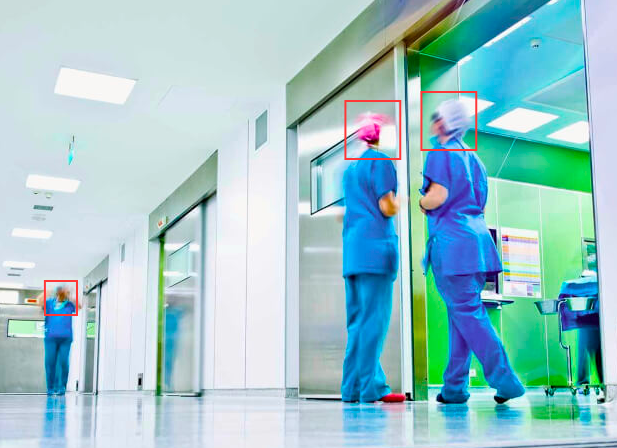
To streamline activities in hospital by round-the-clock monitoring, an AI-based real time video analytics was employed. This solution can be seamlessly integrated with the hospital's existing CCTV video surveillance system and uses machine learning algorithms to recognize and classify patients and nurses.
A facial recognition system was also introduced to identify health care workers in the hospital.
Background
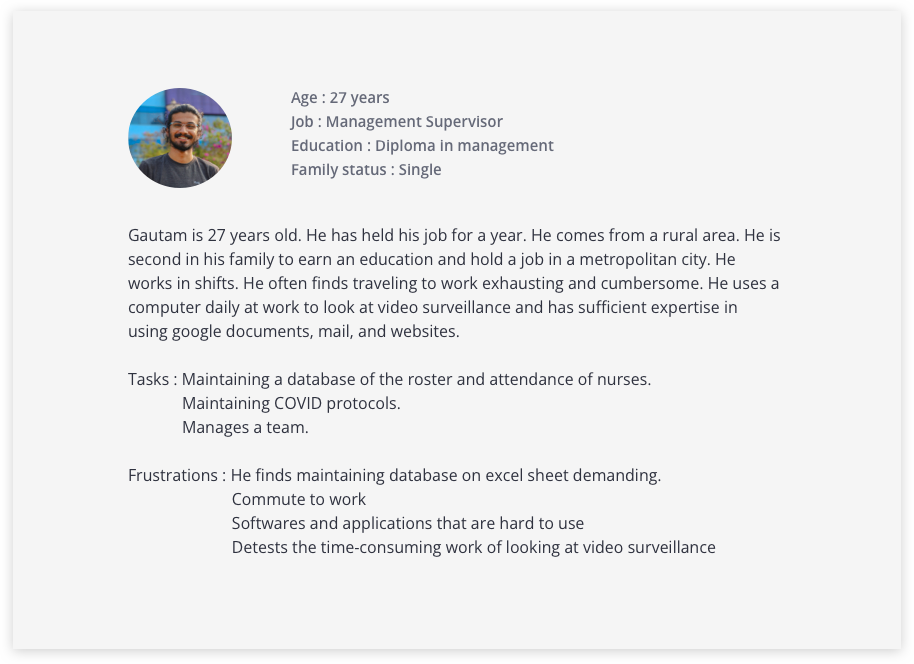
The admins of the hospitals maintained their database on an excel sheet to record their daily activities such as attendance roster, food entries, cleaning activities. I relied on this document to gather data points. Additionally, the interviews with the client were helpful in establishing new use cases. I also relied on a second-hand user interview from the client to create user persona.
User Persona